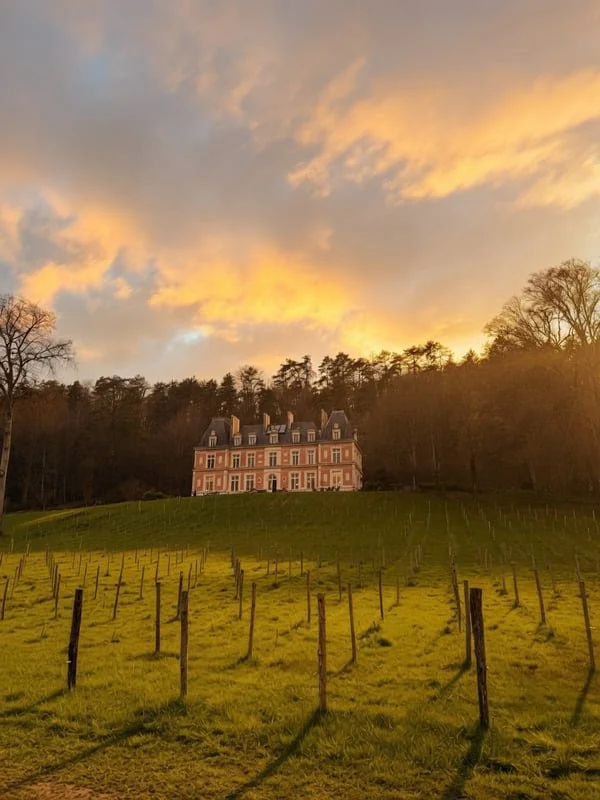
TAG Artist, Victoria Loschuk, has been awarded an artist residency at Chateau d'Orquevaux Artist Residency for June 2027.
“The residency creates an environment for the artist in their quest for personal growth and artistic expression--while reinforcing that the end product is not necessarily the principal focus.
We believe life is a creative journey and consider every moment a part of the process.
New experiences stimulate creativity and revitalize the creative mind. For this reason our residency is self-motivated. The artist must immerse themselves in the French country lifestyle.
The things you thought you knew back home will begin to look different.
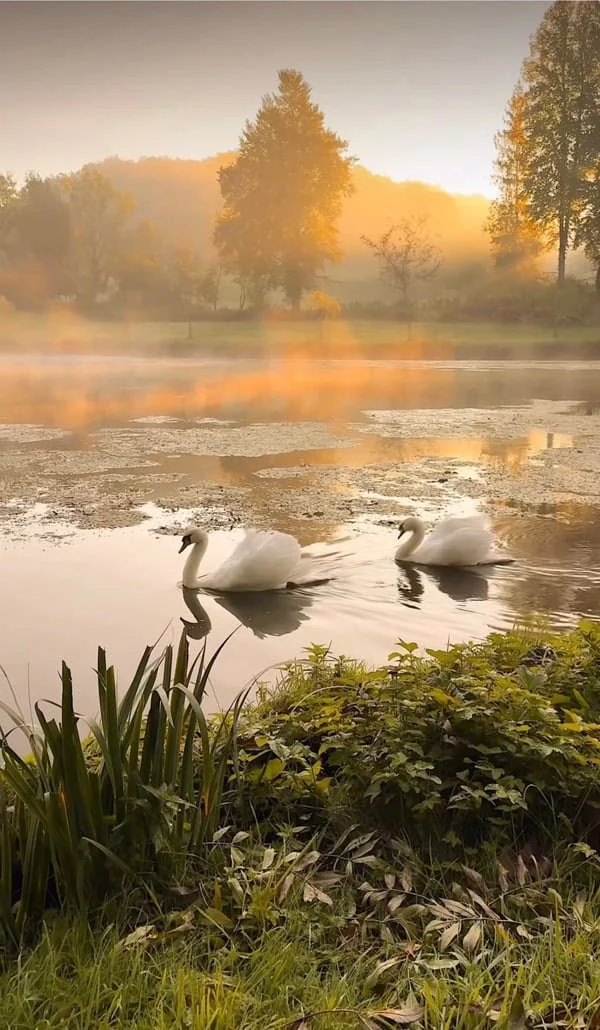
This magnificent estate in the French countryside of Champagne-Ardenne is a unique environment, offering artists a place with limited distraction, plenty of food and an abundance of natural inspiration.”
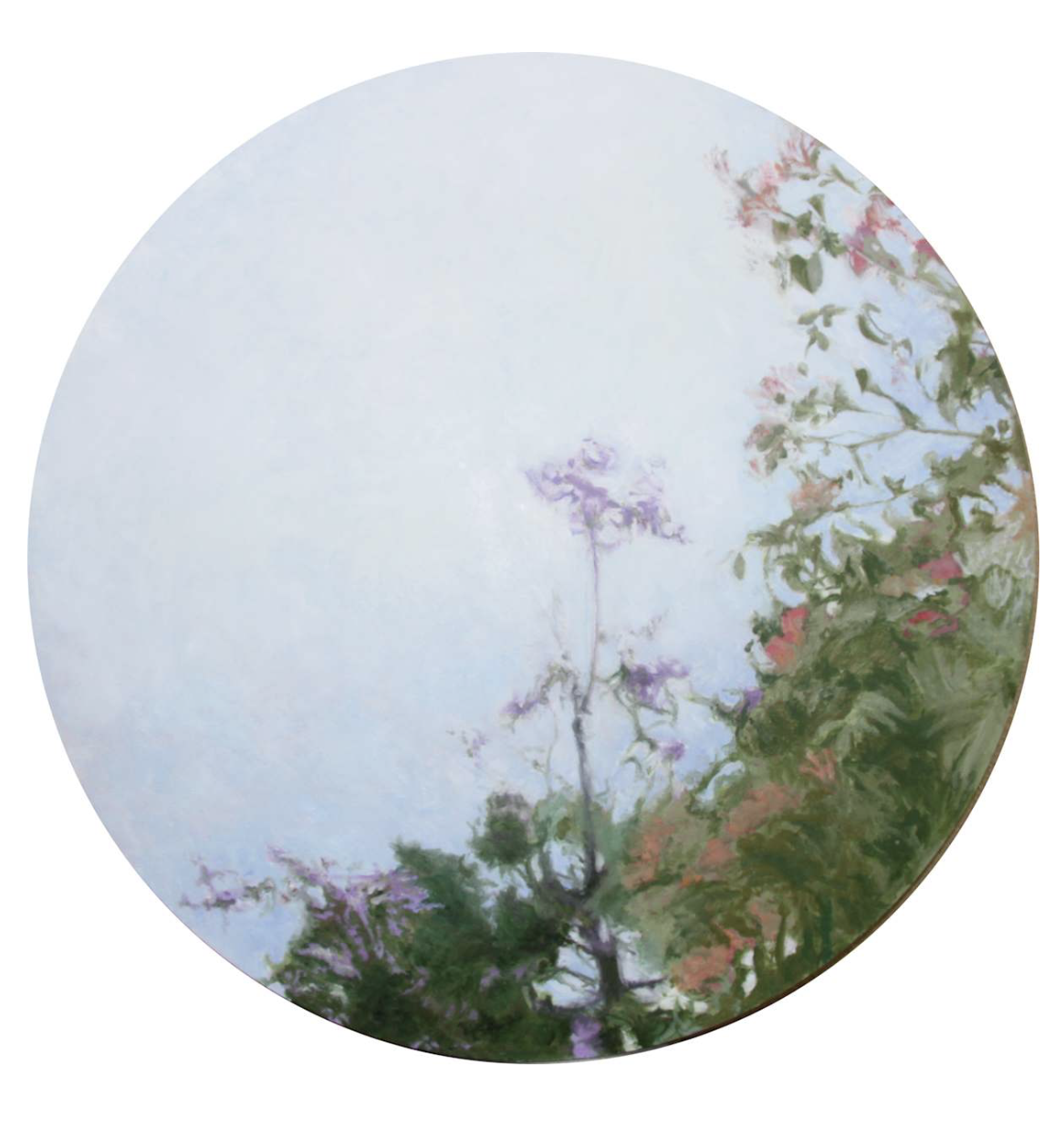
Victoria Loschuk recently exhibited her solo show “Verdant Rapture” at TAG Gallery in May of 2026. Her work examines natural environments and landscapes, invigorated by a unique perspective on both space and composition. This residency amplifies and builds on her exciting and dynamic body of work.
About Victoria Loschuk:
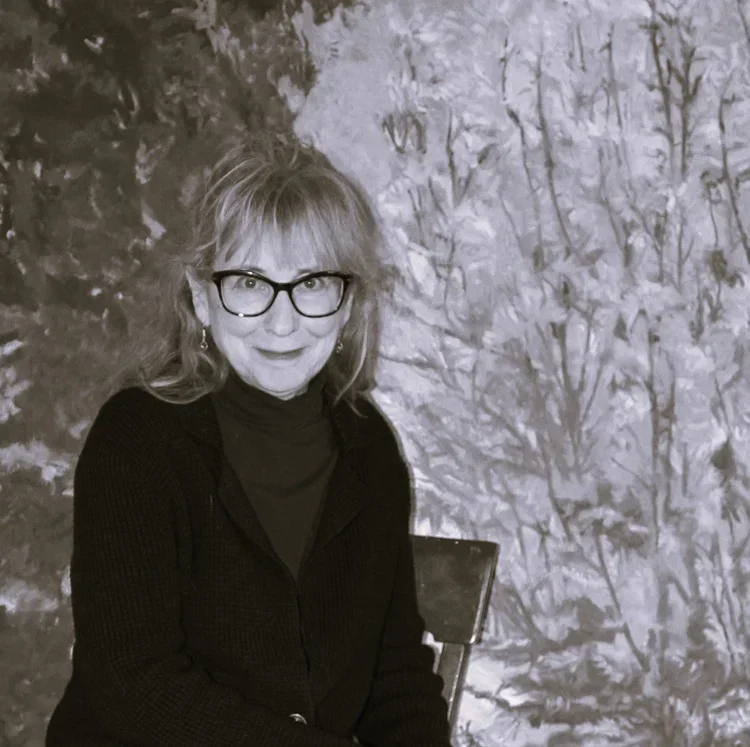
Victoria Loschuk grew up in Western Canada, a formative experience that fostered her connection to the natural environment. She received her M.F.A. from York University in Toronto and has exhibited in venues in the U.S. and Canada, most recently at Realarts Gallery in Agoura Hills, Artcore Gallery, Los Angeles, and at the Broome Art Gallery at Cal State Channel Islands, Camarillo. She has been awarded Canada Council grants and Artist Residencies at the Banff Center, Canada and the Bemis Artist Colony, Omaha, Nebraska. She has lived in Los Angeles for many years where she has co-created artist studio spaces, and has taught Art/Design in the Los Angeles Community College District. Her studio practice, mainly paintings and drawings, explore the varied and abundant natural environment found in Southern California.
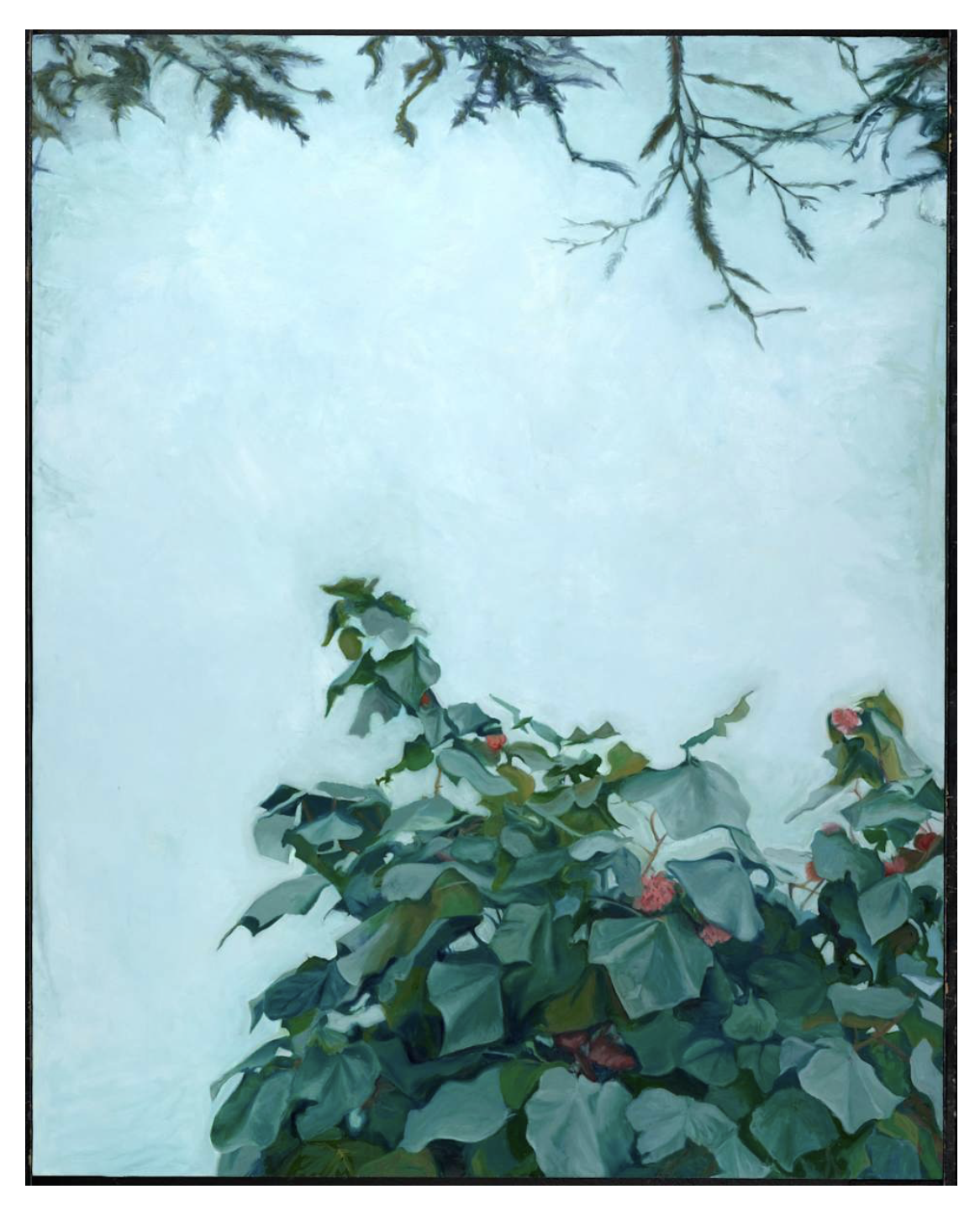
“My painted views of nature have all been found in the city, sometimes in very unlikely urban environments, next to freeway on and off ramps, and behind the architectural structures of our sprawling city. I often found these views and vistas as I drove. Something about their beauty struck me. In the moment, they provided me with the space that I needed to recompose myself, to decompress in the hustle and bustle of city life.
In the design process I crop the views of nature to focus on the contrast and positioning of simple or elaborate representations. Indeed, landscapes, with their rich colors and textures, have become for me, a place to frame and present both the delicate and the bold that I perceive around me, and also a place to paint, compose and play with spatial concerns. The resulting paintings are sometimes ethereal and sometimes more verdant; they reflect the botanical diversity in our environment, the foreign species that coexist with the native flora…”
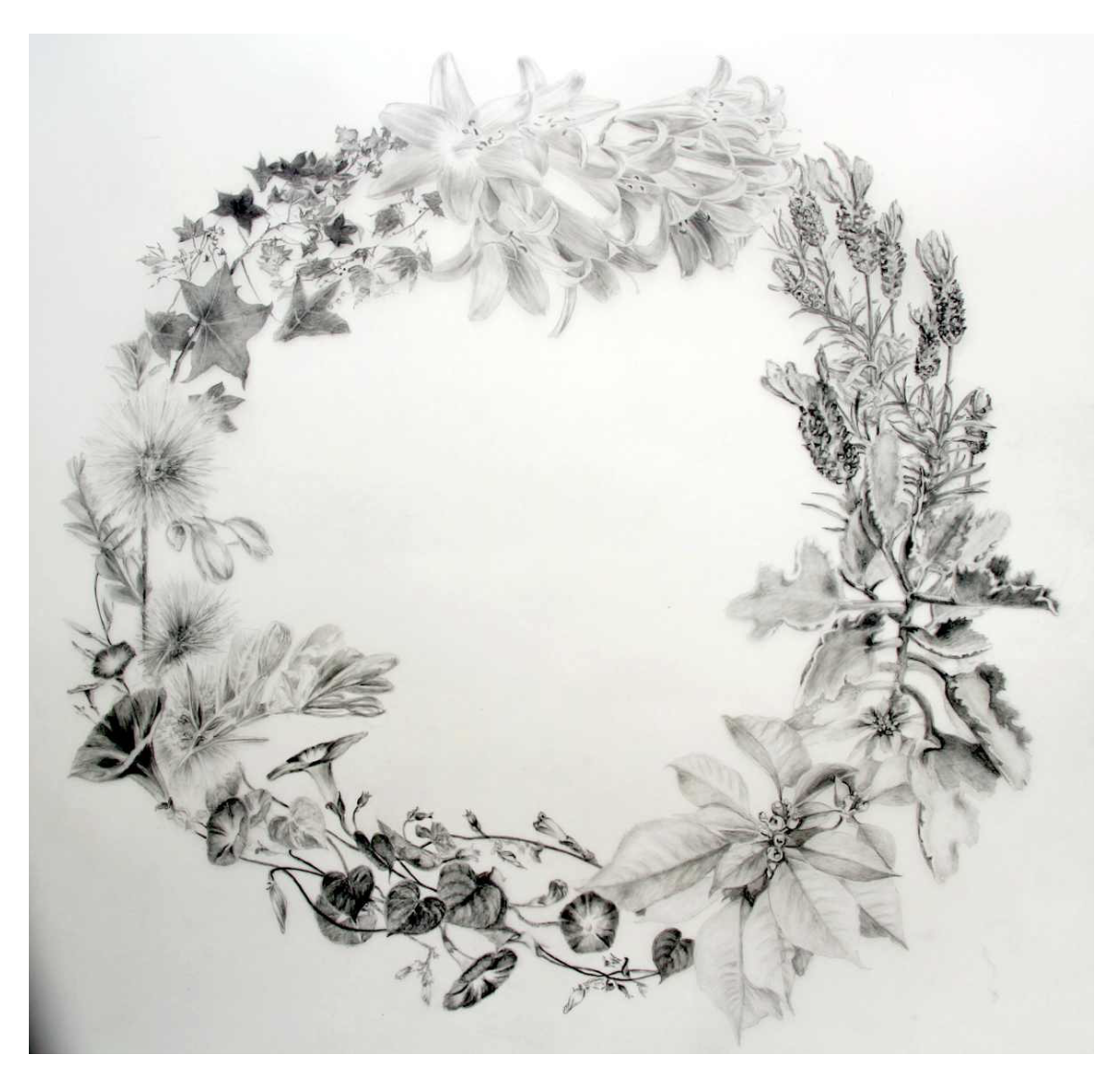
In contrast to the traditional horizontal format for landscapes, the paintings are often composed within vertical formats, and also within squares and circles. There is often no ground in the paintings; they invite the viewer to look up or beyond by framing the sky and space. The paintings are large enough to involve the viewer mentally and physically with the space; they describe a more poetic interpretation of the subject, provide a physicality, a presence, and a solitude that one craves and finds in nature. Like “limbo”; they suspend that existence between sky and earth.
In my drawings I explore perceptions of space and image making through the densities of the medium. Many of the drawings are black oil pastel on rough paper; a non-erasable process that evolves through sensitivity to pressure and tool. Like the paintings, they too can present abbreviated and/or elaborate representations of our varied and fantastic natural environment.
John Muir once said, “Between two pines there is a doorway to a new world.” To me, he was addressing the restorative abilities of time spent in nature. The Japanese call it “Shinrin-Yoku”, “taking in the forest atmosphere”, or “forest – bathing”, a healing process. Like the Japanese concept of “forest-bathing” these experiences and paintings may be an eco-antidote to city life and an homage to nature in a changing world.