
Matthew Rabin
About
Born in New Jersey, I grew up in Shreveport, Louisiana and left in the mid-1980s, moving east and later west. I take photographs that fix where my attention lands—on man-made objects that harbor the past within the present.
I converted to Judaism during the pandemic. It gave me a model of interpretation to create photographs that invite the viewer to turn the photograph over and then turn it over again.
Artist Statement
Two truths ground my practice. First: a photograph is a record of the photographer’s attention—perceptive residue, fixed. My work begins as an artifact of my response to a subject and is agnostic to an audience. Second: art carries the declarative force of “I am showing you this,” and therefore enters public view. My work begins inside that contradiction. Why take pictures for yourself, only to hang them in a gallery?
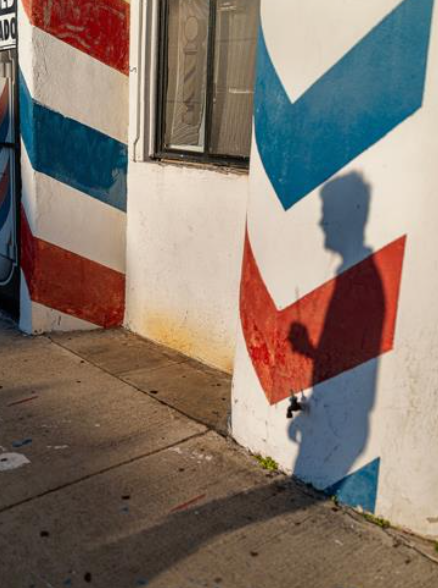
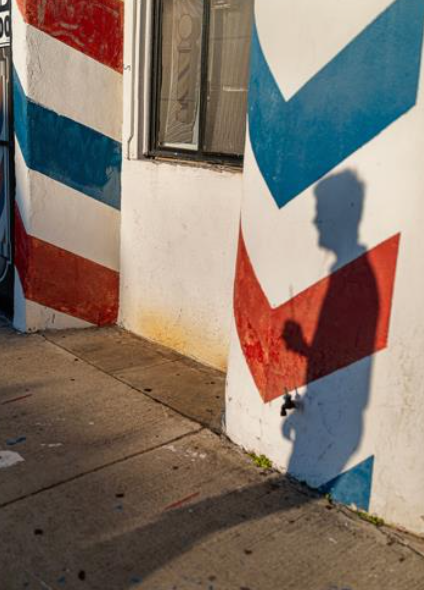
I treat my photographs as fragmented narratives, caught in the interval where meaning can’t (or won’t) congeal. Space destabilizes, the frame cuts hard, and figures reduce to a type rather than a person. So I photograph the past within the present, often through man-made objects, with the ordinary appearing temporally thick without becoming fully legible.
My pictures ask for a second look, not to clarify themselves completely, but to preserve the marks of partial attention.
These formal choices carry private intention into public view without giving the image over to an audience. The photographs do not resolve the tension between subjective intention and public display; they stage it. This is the logic of the rabbinic parable: holding opposed terms together.
The gallery is not where the private act becomes a public statement, but where that tension is made visible.
My practice borrows liberally. Edward Hopper, the hard, angular light; Walker Evans, vernacular architecture and the camera’s indexical deceit; Lee Friedlander and Saul Leiter, both reflection and refraction; William Eggleston, the ordinary made strange.