
Joe Doherty
About
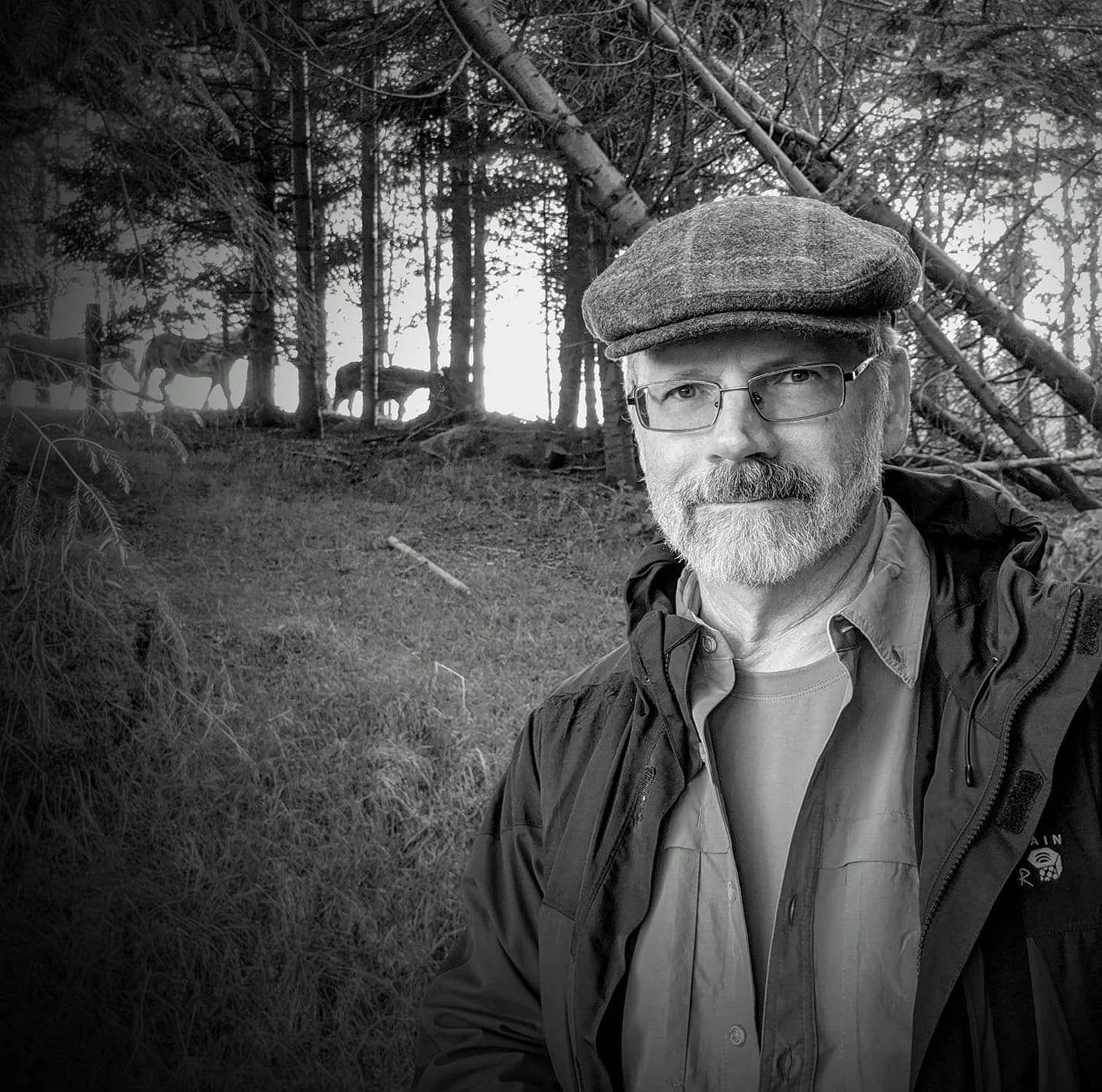
Joe Doherty is a photographer.
He developed his first print in 1972, in a bathroom, using chemicals and paper recovered from the neighbor’s trash can. The print was terrible, and he was hooked. Throughout the mid-70s he used every available moment to shoot pictures – of friends, family, sports, classmates, landscapes – and had his first paying gig at 16. His early influences were the photographers of Life Magazine and Group f/64, and the Hudson River School.
After graduating high school in 1977 he got a job making color prints, and later working as an assistant in commercial photography studio. For a year he ran the lab for a small photo agency, and began shooting as a general assignment photographer. In the mid-1980s he moved to a studio on La Brea, where his work was mostly publicity and editorial. His work appeared in Time, Paris Match, Geo, The Advocate, People, and other publications.
With the birth of his son in 1988 he switched careers. He went to college, ultimately earning a PhD from UCLA. He was hired by UCLA Law in 1999 to be their in-house social scientist, consulting with faculty on empirical legal studies across the many specialties within the law. He developed a reputation as an expert on the empirical study of bankruptcy. He retired from there in 2016 to devote himself full-time to photography, again.
Joe is primarily a nature and landscape photographer. His work vacillates between representation and abstraction, using the extreme capabilities of digital media to capture his subjects. His most recent project is a look backward, a book of photographs of his brother from the 1970s called “The Johnny Chronicles.” Johnny was born with Down Syndrome. The book is a pseudo-documentary account of John’s early life, and of Joe’s development from amateur to professional photographer.
Joe is also a member of the Spectrum Gallery in Fresno, the Yosemite Sierra Artists, and the California Art League.
Artist’s Statement
I do not have a style. Although I am often attaching metaphors and allegories to my images, these words only come after the fact. In the moment of making a photograph I am totally occupied by the task of portraying an ephemeral sort of life using whatever tools and techniques and styles seem relevant at the time. It’s a kind of improv, where the subject tells me what it needs and my job is to listen and say “yes.”